Tuesday, March 24, 2015

Why Director Randall Miller's Statement on Sarah Jones' Death Is Absolutely Grotesque

sarah3

Last February, camera assistant Sarah Jones was tragically hit by a train and killed while working on the set of director Randall Miller’s film Midnight Rider in Georgia. Despite the fact that Miller had expressly been denied permission to use the train trestle by the tracks’ owners, he went ahead with the shoot regardless.
Earlier this month, Miller accepted a plea deal on an involuntary manslaughter charge and was sentenced to 2 years in prison and 8 years probation. As part of the plea deal, charges against his wife, Jody Savin, a producer on the film, would be dropped.
On Friday, he released the following statement:
On Feb 20th, 2014, a great number of mistakes were made and the terrible accident occurred which took Sarah Jones’ life. It was a horrible tragedy that will haunt me forever. Although I relied on my team, it is ultimately my responsibility and was my decision to shoot the scripted scene that caused this tragedy.
I pleaded guilty for three reasons: first, to protect my wife and family; second, out of respect for the Jones family and to not put them through a difficult trial; and, third, to take responsibility for my failure in not knowing that every safety measure was in place.
The location manager, the production designer, the unit production manager, the cinematographer, assistant director and others all made mistakes that led to this, but I have taken responsibility because I could have asked more questions, and I was the one in charge. I have worked in the film industry as a director for 25 years and never had a significant accident of any kind on any one of my sets.
I am heartbroken over this. I hope my actions have spared the Jones family more anguish and that the on-set safety measures that were lacking before this terrible tragedy will now take precedence for all in the industry.
Reading the statement this past weekend, I found myself absolutely incensed over how grotesquely defensive and weirdly self-righteous it is. Throughout the piece, Miller points fingers at his entire crew, all while portraying himself as having simply been the victim of a lack of information.
Let me explain a bit why this hits so close to home.
sarah
When you work on a movie, there is intense pressure to provide everything the director asks for. You’re there for one purpose, to help realize the director’s vision, and if you can’t do it, you should get out of the way for the folks who can.
In other words, the worst thing you can say to a director is “no.”
For the most part, the shoots I’ve worked on in my career have been conducted safely and professionally. But I’ve certainly run into my share of directors like Randall Miller – guys who are willing to put their crew at unnecessary risk, say, by demanding a street be closed without police permission, or attempting to forgo a safety test for an abandoned location knowing there’s a good chance it’ll come back positive for asbestos and other hazards. I once nearly got in a fist fight trying to stop a crew member from literally cutting down a stop sign that the director felt was out of place in his shot.
The blowback you get from denying requests like these can be unbelievable. “Come on, can’t we get away with it?” “No one’s going to get hurt.” “It’ll just take five seconds.” “Well, why didn’t you anticipate the director would ask for this in prep?”
Thankfully, I’ve only had the privilege of working for the utmost professional of location managers, who have always had my back, and were always willing to commit the most egregious filmmaking faux pas imaginable: saying “no” – and sticking by it.
Midnight Rider’s location manager, Charley Baxter, worked hard to get Miller the train trestle he wanted to film on, and was apparently able to secure permission to enter the property surrounding the tracks, which belonged to a paper mill. However, a request to film on the actual tracks was denied by the owner, CSX. In true filmmaking “never say no” spirit, Baxter reached out to a different CSX representative – and was again turned down.
Baxter is on record as having forwarded the CSX email denials to Miller, Savin, 1st AD Hillary Schwartz, and executive producer Jay Sedrish. He later had private conversations with each about the situation.
Charley Baxter dared to say no to Miller – but it didn’t matter. Miller, who along with Savin had regularly bragged about skirting safety regulations in favor of guerrilla filmmaking tactics in the past, went ahead and filmed on the bridge anyway. And on February 20, 2014, camera assistant Sarah Jones was killed as an unexpected train barreled through set.
Tellingly, Baxter was not on set that day. Nor was a set medic, which is simply unheard of.
I don’t know any of the crew members who worked on Midnight Rider, but I can imagine a likely chain of events. The paper mill says yes, the track owners say no. Permission is secured to be “near the tracks” i.e. seems like enough legal wiggle room to steal a few shots on the bridge, because we all know nothing is actually going to happen, right? Some attempt is made to figure out the train schedule – I wouldn’t be surprised if some poor PA was sent to literally sit by the tracks for a few days to try and figure out how frequently they came.
And then the day of the shoot arrives, when cast and crew are told that if a train happens to be spotted, they’ll have 60 seconds to get off the tracks.
At this point, I imagine a look was exchanged between crew members, a conversation that went unspoken: “Should we be doing this?” “It must be safe if the producers and director are saying it’s OK.” “I’m sure we’ll be fine. Who dies on a film set?”
To make matters worse, Midnight Rider was a low-budget endeavor and had a number of crew members who were up-and-comers. In other words, folks looking for the chance to prove themselves when the going got tough. Here was just such an opportunity.
sarah2
On first glance, it almost sounds like Miller is owning up to the crime in his statement. But let’s parse this thing a little more closely to see what he’s really trying to say:
Although I relied on my team [my crew was unreliable, and let me down], it is ultimately my responsibility and was my decision to shoot the scripted scene that caused this tragedy.”
I pleaded guilty for three reasons: first, to protect my wife and family…” [above all else, the reason I pleaded guilty was to get the charges dropped against my wife]
Second, out of respect for the Jones family and to not put them through a difficult trial…” [I’m only pleading guilty because proclaiming my rightful innocence would cause too much grief for the Jones family]
And, third, to take responsibility for my failure in not knowing that every safety measure was in place.” [Why is this third? Why isn’t this first? Why are there even any other bullet points to this?]
The location manager, the production designer, the unit production manager, the cinematographer, assistant director and others all made mistakes that led to this…” [Literally, everyone on my crew is in some way responsible for the tragedy.Everyone except the producer, who happens to be my wife.]
But I have taken responsibility because I could have asked more questions, and I was the one in charge.” [I am only guilty of being misinformed. Had I been better informed by my crew that filming on a train trestle that we had been expressly denied permission to enter is fucking dangerous, this tragedy could have been avoided.]
I have worked in the film industry as a director for 25 years and never had a significant accident of any kind on any one of my sets.” [My unblemished record is further proof of my innocence.]
I am heartbroken over this. I hope my actions have spared the Jones family more anguish…” [Please acknowledge my sacrifice in pleading guilty when I do not believe it to be the case]
…and that the on-set safety measures that were lacking before this terrible tragedy will now take precedence for all in the industry. [Had proper film safety measures been more securely in place, I would have never been allowed to do what I did.]
For Mr. Miller’s sake, I’ve provided an edited version of his statement below, which he is more than welcome to use should he have any interest in proving to the world he has a soul:
On Feb 20th, 2014, a great number of mistakes were made and the terrible accident occurred which took Sarah Jones’ life. It was a horrible tragedy that will haunt me forever. It is ultimately my responsibility and was my decision to shoot the scripted scene that caused this tragedy.
I pleaded guilty for one reason: to take responsibility for my failure in not knowing that every safety measure was in place. I could have asked more questions, and I was the one in charge. I have worked in the film industry as a director for 25 years and never had a significant accident of any kind on any one of my sets.
I am heartbroken over this. I hope that the on-set safety measures that were lacking before this terrible tragedy will now take precedence for all in the industry.
sarah5
When I first heard of the incident last year, I found myself having a very emotional reaction. In particular, it brought me back to an incident that happened very early on in my career.
I was working as a locations production assistant (lowest job there is) on a large movie being helmed by a very famous director.
We were filming on a rooftop I’d scouted and helped to secure. Contracts were signed, insurance was in place, building reps were on site, riggers had prepped the location, and we were all ready for the shoot.
Then something unexpected happened. The director arrived on the rooftop, looked around, got a funny expression on his face, and announced we were on the wrong roof.
This was an extraordinarily odd thing to say, as not only had we scouted this very rooftop with him personally, we had later tech scouted it with the entire crew. Nevertheless, the director looked around, pointed at a neighboring rooftop, announced that that was where he wanted to film, and started off.
This sent the crew into pandemonium, and soon, everyone was frantically trying to haul equipment off our rooftop and get into the neighboring building where we had absolutely no permission to be. Mind you, this wasn’t a small independent film – it was a $100 million dollar studio film with a crew numbering well over 100.
The director managed to get into the building and took the elevator to the roof. The camera crew arrived next, and loaded up the intensely small, incredibly ancient elevator with gear. A few guys managed to squeeze in with it, and they started up.
The elevator got stuck somewhere between the 17th and 18th floor.
There was nothing we could do. We obviously didn’t have a super on call as we did at the original, planned location. Hell, we didn’t even know who the management company was. I recall an off-hand suggestion being made by a producer that if we were able to get in touch with management, to make the filming deal before letting them know about the elevator situation, as they might otherwise charge us more.
The crew members remained trapped in that elevator for about half an hour before we finally managed to locate someone who could get them down. Meanwhile, the rest of the crew used the stairs, and the director was able to get his shot, which lasted all of 4 seconds in the final film.
What I’ll never forget is a crew member turning to me right at the start of the whole fiasco and asking “Should we be doing this?”
All I could do was shrug. Who was I, a lowly locations production assistant, to stand in the way of a famous, well-respected director and hold up his $100 million film?
It chills me to think that had that same young locations PA been on set that day in Georgia and been asked the same question, he would have ultimately trusted his director, Randall Miller, and gone right up on that train trestle with Sarah Jones.
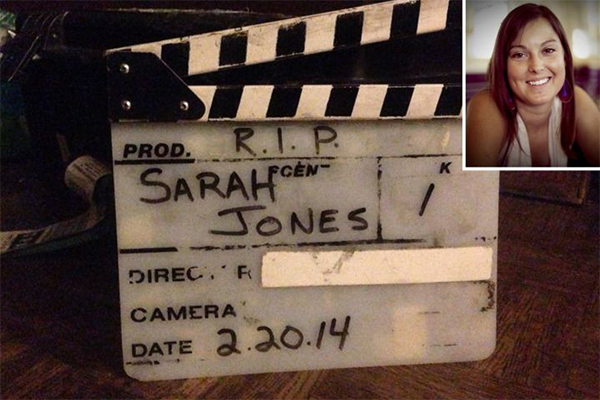
When I look at pictures of Sarah Jones, I see myself.
sarah4
“Should we be doing this?”
The single saving grace about this horrific incident is the fact that we now have something to say when a simple “no” won’t suffice for people like Randall Miller, who disrespect their crew by treating filmmaking as an exercise in swashbuckling derring-do.
We’ll simply say “Sarah Jones.”
* * * * *
I know that quite a few folks in film production read this blog. If you’d like to share any personal stories of directors/producers forcing their crews to take unnecessary risks, I’d be more than happy to highlight them here. Feel free to remain anonymous.
Finally, be sure to check out Slates for Sarah and Safety for Sarah, industry-wide efforts to keep Sarah’s memory alive and create a safer working environment. I also recommend this 20/20 pieceon the tragedy, which goes into much further detail.

Tuesday, January 06, 2015

WHY ARE B MOVIES SO DAMNED IMPORTANT?


It really brings to light the importance of B Movies. Just because you are doing a low or micro budget film does not mean you shouldn't make it the best possible. Always shoot the best script possible for the best budget allowed and you never know what role your film could have in the world of cinema. The most important thing is to get out there and do it.

Ramblings! Imagine Rock and Roll. Now imagine Rock and Roll without Louie Louie, Paul Revere and The Raiders, The Beau Brummels, The Monks, Tommy James and The Shondells, The Troggs, The Velvet Undergound, The Ramones The Violent Femmes and Berry Gordy. Now imagine that with a wave of the hand these musical powerhouses and their influences were removed summarily from the history of Rock and Roll. It would be a pretty empty landscape.
Now imagine the movies with the influences impact of Lumiere, Porter, Tourneur, Lewton, Guest, Micheaux, Stanley, Lamont. Arkoff, Corman, The Shaw Brothers and The Asylum being summarily removed from the body of cinema. A cinematic black hole would have been created. Cinema would collapse.

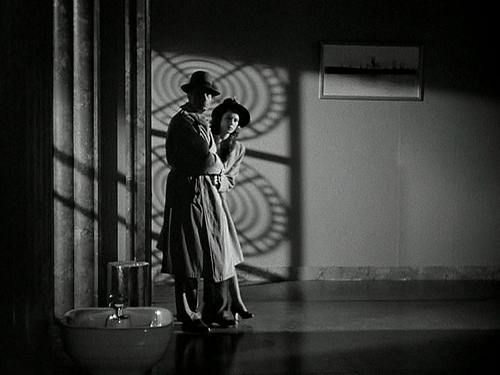
Cat People, Jacques Tourneur
When cinema began, they were in the sense of the word B Movies. Porter’s “The Great Train Robbery” and George Melies’s “A Trip To the Moon”, were at their core and in their inception and execution B Movies. They were populist pieces of exploitative storytelling. These films were shot in a manner to give their audience as many shocks as possible. Cinema would later layer of pretensious airs and high art, when film criticism arose. Analysis would give rise to pretense, but in the beginning cinema had at its core, the word “fun”.
As a result of this emerging pretension B Movies gained their name and were relegated to the second bill of a double bill. During the 1930s, the B label was equivalent to the term low-budget; both implied films made on limited resources and aimed at filling double bills. A’s were made on budgets averaging $350,000 or more, with stars who appealed to a wide cross section of patrons. These films were intended to play the top half of a double bill, with a running time of seven reels or longer, and were produced on shooting schedules that allowed time for rehearsals and retakes. B’s, by contrast, had their own basic prerequisites. First, they were to fill the bottom half of a double bill. Second, B’s had leads with unknown box-office appeal, such ht pantheon of cowboy stars. The budgets and shooting schedules were more limited, and B’s were usually made in three weeks or as little as one week. Their running time ordinarily ranged from fifty-five to seventy minutes. Averaging six reels, some B’s could be as short as five reels or less.

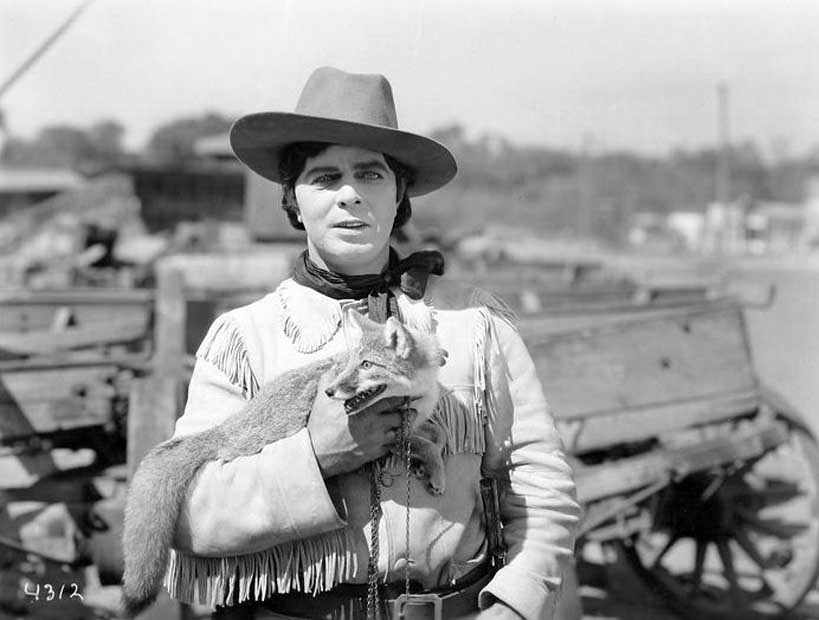
Hoot Gibson
Hoot Gibso
The budget, script, and performers often indicated in advance which pictures were intended to be B’s, but the product of B units was not necessarily an accurate guide to the status a film achieved when placed in distribution and exhibition. Many times, the B Movies turned out better than A movies and gained huge success; these movies were boosted to A status and became the top bill. B Movies like THE PAYOFF (Warner Bros., 1935) , MAN TO REMEMBER (RKO, 1938), PENITENTIARY and the studio’s nearly all girl melodrama GIRLS’ SCHOOL (both 1938) gained promotion as a result of their box office success. Any truly great B Movies takes a cue from world events in its inception and marketing. A Flash Gordon serial was cut into a feature version entitled MARS ATTACKS THE WORLD (Universal, 1938), it was lucky to open shortly after the infamous Orion Welles radio broadcast The War of the Worlds. B Movies capture audiences imagination with films like TARZAN THE FEARLESS (1933), starring Buster Crabbe, or the more than exploitative midget Western THE TERROR OF TINY TOWN (1938), which became such a hit that it was picked up for distribution by Columbia. Actors like Fred Mac Murray and Mickey Rooney ascended so quickly that their B Movies often ascended with them. Many B series became their own stars, as with one of Fox’s biggest hits, the Charlie Chan series.

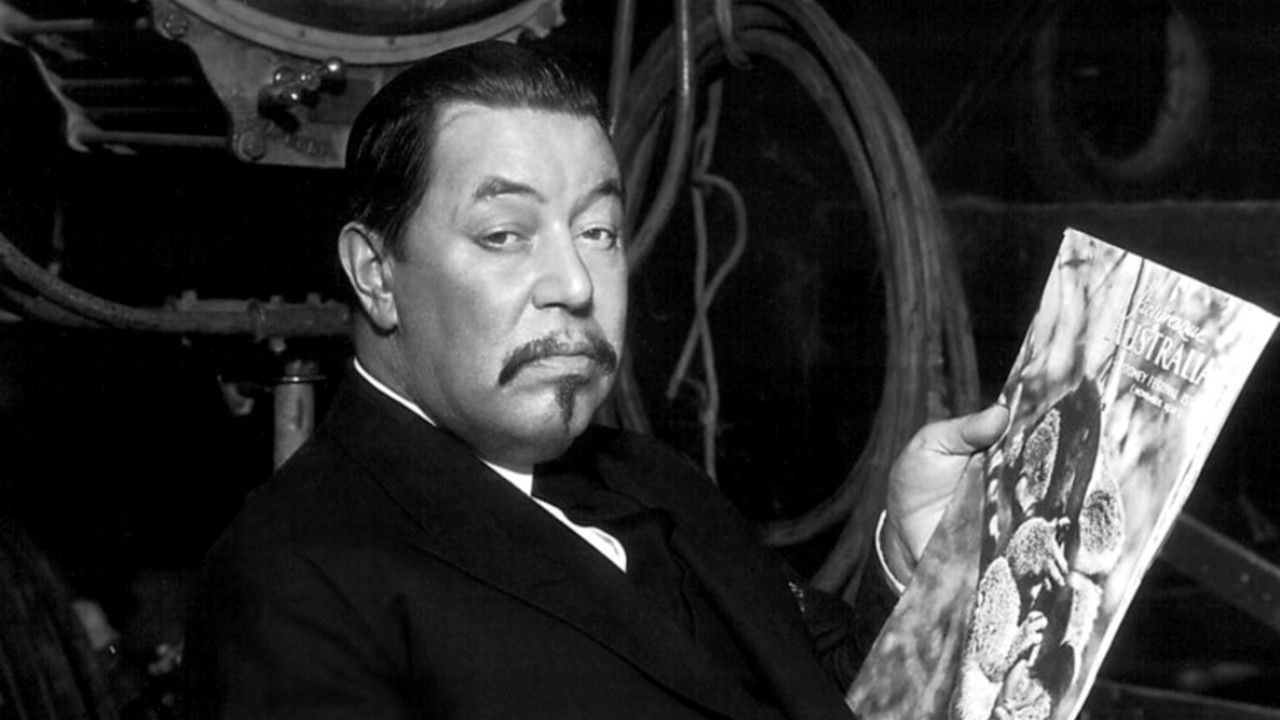
Warner Oland, Charlie Chan
Today, we often make the deep mistake of thinking that B cinema is a past history when in fact in garages, basements and in the most unlikely places B cinema oozes out and joins the tradition and legacy of this more than important strand of popular cultural. While it is important to recognize the past world of B cinema, to look back affectionately at Corman, Don Dohler and Charles Band, it is even more important to shine a light on emerging artists like Joe Lawson, Jared Cohn, Gabriel Campisi, Emile Smith, Brett Kelly, Henrique Couto, Maxim Dyachuk, Stuart Simpson and Chris Olen Ray. These new works, emerging out of a time when studios have short shortsightedly abandoned B movies gain more importance as they struggle to define themselves in an increasingly monopolized marketplace.

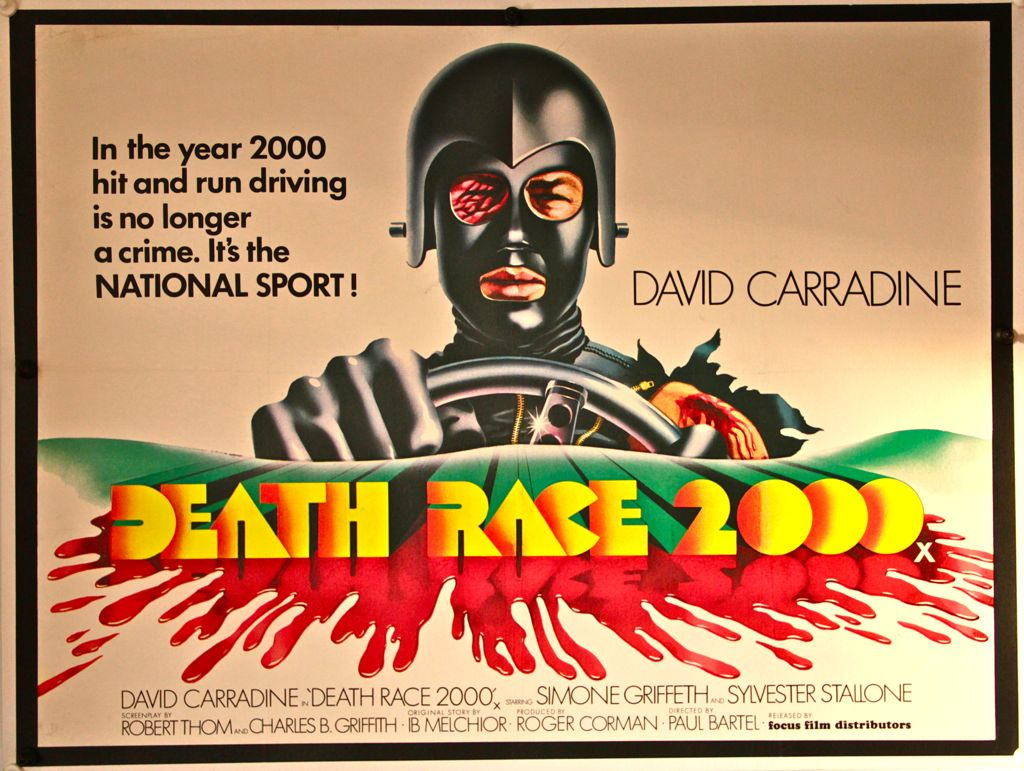
Paul Bartels' Death Race 2000
Paul Bartels’ Death Race 2000
Torchbearers like Fred Olen Ray, Jim Wynorski, Steve Lats haw and David Decouteau find themselves often being crowded out of the marketplace by the demands of market share by the majors. The bloom of B Movies which VHS created has long since past and leaves memories of the golden 80’s for many B Movie fans.
Studios, which once breathed life into the B’s with such efforts as Universal emerging works program under the leadership of Ned Tanen which saw the creation of films likes Easy Rider and American Graffiti have now have attempted to steal the essence of B Movies and place them in glossy, CGI engorged behemoths. They of course have failed. The rawness of the innovation contained in all truly great B Movies is a result of having a limited budget coupled with a boundless imagination.

George Lucas's American Graffiti
George Lucas’s American Graffit
In 2015, please remind your fellow film fans that B Movies are truly the Alpha and Omega of cinema. If B Movies cease to exist so does cinematic opportunity and cinematic innovation. Celebrate the past and protect the future. If Cinema is to grow and to prosper as an art form it has to be wrested away from the studios and the cable television minds that control them and given back to the people.

On Set With Jim Wynorski's Gila
On Set With Jim Wynorski’s Gila
Like good Rock and Roll , B Movies have to be both fun and dangerous and if cinema is to be rescued from its current malaise and lack of leadership it’s hope lies on the frontier that B Movies represent. . They are by their true nature a key crucible for all cinematic innovation and imagination.
That’s why B Movies are so damned important.

written by: Bill Dever

Thursday, September 25, 2014

Marketing Your Indie Film: A Few Key Tips to Wrap Your Brain Around

So, let's say you're about to make your movie. Congratulations! You've probably spent, in the indie world, years working to get to this point, and there are so many details that go into making a feature film that I couldn't even begin to think about enumerating them all here; suffice it to say, producing or directing a film involves a series of hundred or thousands of decisions, each with consequences that you might not be aware of for quite some time. And in the pressure cooker that is indie filmmaking, it can be difficult sometimes to see the forest for the trees (to use a totally original phrase that I just thought up, like right now).
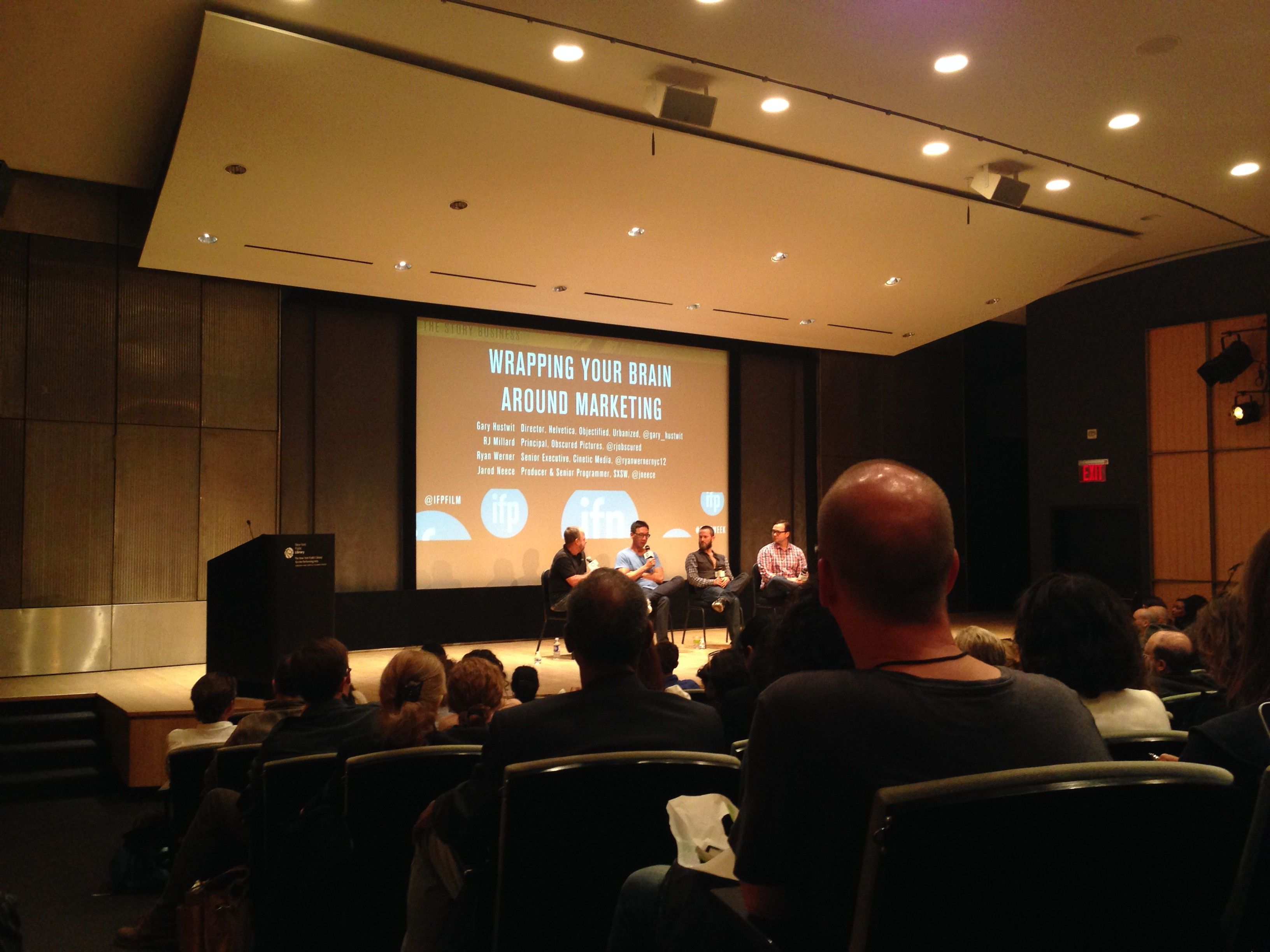
At IFP Week, in a panel moderated by Jarod Neece, Producer and Senior programmer atSXSW, and featuring RJ Millard from Obscured PicturesRyan Werner, Senior Executive atCinetic Media, and Gary Hustwit, director of, among others, the documentary Helvetica, the subject was "Wrapping Your Brain Around Marketing," and it addressed some of the issues that indie filmmakers need to think about:

Stay on Topic


Super Size Me

Your film, like it or not, is a brand, and when you present it to the world, it's important that you have a unity in terms of what you show the world. Because it's "so hard to get attention, get people to remember [your film]," you want to make sure you have the most memorable aesthetic possible so when audiences look at your posters and production material, they immediately associate it with your film. According to Millard, who supervised the distribution of the blockbuster documentary Super Size Me, the image of director Morgan Spurlock that was featured so prominently in the now iconic poster helped to artfully convey the film's theme in a simple, visual manner, and was vitally important to building buzz around the film.

Pictures, Pictures, Pictures (Did I Say Pictures?)

Nearly every filmmaker has had the sinking feeling that comes when they are deep into the edit and suddenly realize that they don't have everything they need, usually in terms of coverage. You've spent so much time getting the vitally important shots, and with time and money burning, that sometimes those crucial masters and cutaways can fall by the wayside. Similarly, the panelists stressed how important it was to have high-quality, professional production stills. They recommended getting a photographer for at least five days, to capture every aspect of the production, from behind-the-scenes, to production stills that can be used in promotion, and everything in between, up to and including possible poster ideas. The point was hammered home that these photos shouldn't be a DIY venture, i.e., the director shouldn't be waving their iPhone around, even if it has the much-hyped iOS optical image stabilization. The fact is you will need lots and lots of photos.

The reason that you're shelling out the money for a professional in the first place is, one, so that the quality of your photos will be as good as it can be, and two, so that you'll have a lot of them, and that is much more effectively achieved with someone dedicated to the task. A figure recommended in terms of volume was upwards of 300, which would be winnowed down and used for different purposes -- one for the first tentpole festival, maybe three for the second, and a good number for promotional materials. "Photos are gold," and are a key part of media coverage. If your film is covered in Entertainment Weekly orThe New York Times (the only major paper left that reviews the average of twenty new films released in New York each week), they will want exclusive images, and you had better be able to provide them. It can make or break your media coverage, especially if you're a low-budget film; having high-quality pictures is priceless.Be Careful With These Images!

Another point stressed was graphic design, and how important it is not to skimp when it comes to your poster and all associated images. The main point was, this is how you are presenting your film to the world, and though your cousin Steve may be good at Photoshop, unless he's a professional designer, you might actually be hurting your film.

Shorts? Docs?

While marketing shorts is much harder (unless you happen to blessed with a "big name" in one of the roles, or as a behind-the-scenes player) there are steps you can take, but these mostly involve cultivating relationships with festival programmers, finding the right festival for your film, and common sense steps that make sure your film, which by its nature will have a different life than a feature, gets to the right people at the right festivals and VOD companies. Another bonus of having a name actor in your short (we should all be so lucky, I know) is that the actor will most likely have a publicist, and this publicist will be inclined to promote a project featuring their client. Again, if this is your situation, count your blessings.
Another salient point was that documentary film, in the new VOD era, has far more distribution opportunities than before, and it's not hard to see why. Oftentimes, films that people wouldn't go see in theaters are the very ones they like to watch at home, on one of the various platforms that cater to home viewing. While narrative features lend themselves to theatrical release, documentaries can often achieve the most success by pursuing alternative routes of distribution, something for all filmmakers to keep in mind.

Crowdsourcing/Email

Today, KickstarterIndiegogo, and other sites have utterly transformed film funding, literally turning it on its head, from a top-down to bottom-up proposition. Now, a film can be funded entirely by a volume of micro-donations, but the success of any given campaign is, of course, contingent upon the quality of your campaign. This is where the preceding elements can be so important; think of your poster and the images that will appear on your crowdsourcing page. And think equally hard about the quality of your video. A good video can make or break a film's chances for obtaining funding.
As an indie filmmaker, you have to use absolutely every resource at your disposal, and one of these is actually the most old-fashioned: the email list. Over time, a filmmaker who networks can generate a robust list of thousands of people who are willing to check out your press releases and announcements in their inbox. And these people can be vitally important. Because everyone and everything is vitally important. And in the age of Twitter and Facebook, always remember that your message will end up down the feed within minutes, depending on how many people your target follows. Therefore, you run the risk of losing out on a potential new supporter/fan. Phone calls are important, too!
And never, ever, promise something you can't deliver. If you say that you'll have DVDs for a Kickstarter donation, then you better be able to produce them, because otherwise people are likely to be a.) annoyed and b.) not willing to trust you in the future. Best to avoid both of those issues by only promising what you can deliver, which is a good lesson for life, actually. (The more you know -- )

Participation

If you're a filmmaker, then you should probably be hanging around with other filmmakers, and that means attending conferences like IFP Week, festivals, and other mixers and conventions where you can get a chance to network with your fellow filmmakers. After all, indie filmmakers are a special, scrappy breed, and there can be a great affinity and community among them. The relationships in the film community are frequently what get films made, and even if you're an introvert, forcing yourself to get out there, shake hands and yes, sell yourself, is vitally important. It's just a fact that people like to help their friends, so make some!
By following these common sense steps, a filmmaker can exponentially increase their chances for success in the marketplace. So much information is out there, and much of it isn't obvious, or can seem mysterious and, above all, expensive. But, though it's a cliché, you always have to spend money to make money (or just get your film out there), so budgeting money for these relatively simple procedures can give you a priceless return on your investment. In the indie world, especially, every dollar counts, so when you're spending your money, make sure you're spending it not just on the film itself, but on the numerous details that can make or break your ability to reach the marketplace.
In that vein, if you can afford it, working with a sales agent can be tremendously helpful, since it's their job to help you navigate your way through the obstacle course of getting your film out in front of the maximum number of people. And since that's the end goal, every filmmaker, no matter what their budget is, should have a plan in place for marketing their film, and this plan can be implemented months, even years, before you call "Action!"
Stay tuned for more coverage of IFP Film Week! We've got some great and useful coverage coming up, and information you'll definitely want to check out. 

Wednesday, September 10, 2014

Making movies with the GH2 - The Inside Story


GH2
GH2 Panasonic
After spending thousands of Dollars trying to create that elusive “film” look with Sony EX1 and EX3 HD camcorders equipped with Depth of Field adapters, I was pleasantly surprised when DSLR stills cameras that could actually shoot full HD (1920x1080 pixels) video arrived in late 2008. 

The first of these was the Canon 5D mk lII: a camera with an aesthetically unparalleled video image and very shallow depth of field. It rendered my EX1 and Shoot35 depth of field adapter totally redundant.
Canon starts the shutter rolling

The Canon had its teething troubles but after some firmware updates - not to mention firmware hacks by third-party developers - the Canon 5D mark II became the most widely used digital film camera in the coming years. It was helped in this by the exposure and airplay it got from filmmakers like Philip Bloom and from the US TV series House, which used the 5D exclusively for one episode. Philip's Bloom’s blog and his beautiful DSRL movies opened the floodgates and made clear that DSLR filmmaking was an important new phenomenon and that it was here to stay.
Since those early days of DSLR shooting, numerous TV commercials, music videos and even feature films have been produced using the 5D. Companies like Technicolor and my own company, Marvels Film, developed special camera “picture profiles” to make the image of DSLR cameras more suitable for commercial film production. The Marvels Cine picture profile has been downloaded over 350,000 times since it's first release in 2009. 
 
The secret of the 5D's success lies mainly in it's price (below $2000), its ease of use, its availability (almost literally) on every street corner, the simple editing workflow and last but not least: the camera produces filmic images that renders it fit even for feature film cinema production.

Around DSLR filming a whole new industry evolved, offering specialized camera rigs, accessories and filmmaking tools. But most of all, it inspired thousands of people around the world to pick up a camera and become a filmmaker.

To my amazement - and I'm still amazed - until the end of 2009, Canon remained the only brand producing video-capable full-hd DSLR cameras (also called HDSLRs). Nikon, Sony and others never offered any serious competition and seemingly lagged behind. Whether this was for commercial/strategical or technical reasons remains unclear.
Meanwhile, Canon launched a number of even more affordable HDSLR cameras that were cheaper to produce, offering smaller imaging sensors, more popular frame rates, less expensive lenses and  more features for film makers - kicking the price of a full HD “film camera” well below $1000.
 Panasonic enters the field

At the end of 2010 Canon lost its monopoly on the market to what I think was an even more remarkable newcomer: the Panasonic GH1. This camera featured the Micro FourThirds lens mount and had a smaller chip size compared to the 5D with its “full size” sensor. With a somewhat shallower depth of field, but stunningly detailed images for it's price (approx. $800), the “Panny” GH1 looked like becoming the first serious competitor to Canon's D-series cameras.

Russian “hacker” Vitaliy Kiselev even made a special version of the GH1's firmware enabling other frame rates and better image quality (making it possible to tweak the video codec and compression settings).

The GH1, although a technical marvel, was not a camera for the masses. It's non-european 23.97 video frame rate and the need for fiddling with technical hacks (that violated the warranty) rendered it a “camera for geeks”. Although people like Philip Bloom did a few very positives blogs about the camera, supported with beautiful images, it never really caught on with videomakers.
But Panasonic came back strongly. In a way that even left Canon scratching it's head...
The GH2 arrives
At the end of 2010 Panasonic released a few pre-production models of a new DSLR camera to a handful of professional filmmakers. I was among the lucky few to test (and keep) this successor to the GH1, called the “DMC-GH2”. Since I never saw it's predecessor in real life, I had no idea what to expect. From the pictures I couldn't have guessed it was such a small and lightweight camera. I have the same “problem” now with the Red Scarlet-x. Until the moment you actually hold it, you can't foresee how it's form-factor feels in the hand, its balance or even its actual size.
When the GH2 arrived in its oversized box, I was flabbergasted to find a camera that was barely larger than my hand and as light as a feather. A treacherous part of my brain said, perhaps accurately: “you'll look like a twerp filming with this camera”. But don't let that first impression deceive you. Inside its tiny plastic housing lives a HD film-making monster waiting to get out. Apart from its highly portable and inconspicuous form factor, it has a number of advances over all the other DSLR video-capable cameras:

  1. Higher video resolution (more resolved “lines”) due to a state-of-the-art image sensor
  2. No “moire” or other visible artifacts caused by video downscaling
  3. Higher ISO sensitivity up to 3,200 (standard), 12,800 (with hack)
  4. AVCHD codec 24Mbps (standard), 176Mbps GOP1 (with hack)
  5. 24, 25 and 30 frames per second (120 fps slow motion with hack)
  6. Realtime continuous auto focus (with Panasonic lenses)
  7. Touch screen with touch-to-focus ability
  8. Very useable histogram display and highlight clip display function
  9. Clean full-HD HDMI output (no menu or other display items in view)
That last item was a real advantage over any other DSLR camera. Having a clean, uncompressed, full HD HDMI output on an HDSLR camera means that you can record that signal directly to a professional external digital recorder, bypassing the camera's video compression! Prices of such recorders dropped below £1000 with the arrival of the “Ninja” recorder, by Atomos, in early 2011.
With the right lens (e.g. the Voigtländer 24mm f0.95 or any other choice of DSLR lens using a adaptor ring) this little camera rocked! Philip Bloom has published a Christmas Camera Shoot-out 2011 video on both his blog and YouTube, with the GH2 being the absolute winner when it comes to resolution and clarity. It blows £10,000+ cameras out of the water for a tenth of the  price. Regrettably for Panasonic, in my view it even outclasses Panasonic's own AF101 £4500 camera!
It's rumored that Panasonic's professional division is not very happy with the GH2 release, because it's deploying a far more modern and advanced image sensor than it's AF101 flagship. A little miscommunication between Panasonic's professional and consumer divisions?

What would AF101 owners, who paid over 4000 quid for this camera think of this? Well, as a matter of fact – i'm one! To cut a long story short, I was happy to flog my little-used AF101 for a reasonable price in 2011. You can reason that the AF101 is a real video camera with many professional controls and a better look-and-feel form-factor-wise, but I genuinely felt the GH2’s image was better...
Please have a look at Phil's 2011 Christmas Camera Shootout and watch the GH2's 400% blowups – it's absolutely amazing. If the Canon 5D mk lII produces imagery fit for cinema projection, then this little camera will surely match the requirements: retaining enough resolving power to cover a 40 foot screen (or larger) when blown up to 2K cinema DCP resolution. It surely does!
Well, enough euphoria for now. Let's have a look at some drawbacks i've discovered while using the GH2.   
Even an amazing camera has drawbacks
Tiny plastic body that is totally out of balance with almost any lensIts extremely light weight makes the camera prone to vibrations and uncontrolled  hand movement and calls for lens or camera stabilization. (My solution: use a monopod.)  As with it's predecessor, the GH1, the true power of this camera is unleashed after installing a third-party firmware “hack”, although this now seems to be safe and not violate your warranty - if all traces of the hack are removed! When not recording (preview) the camera will not display a what-you-see-is-what-you-get image, color and lightness/gamma wise. If you hit record, the display will show what will be recorded. Not a real show stopper, but something to pay attention to when recording the image to an external recorder. Bear in mind that at time of writing NO OTHER DSLR camera can output a clean HD HDMI signal, so I can live with a little jump in gamma and color after pressing Record.
  1. There are a few very usable picture styles that come to the aid of the shooter, but the camera lacks the ability to load and write so called “picture styles” or “picture profiles” (gamma curves), like the Canons do. Nevertheless, the picture style menu offers a reasonably “flat” picture style.
  2. The GH2 is not the best low-light performer. Here the Canons surely take the lead. Increasing the ISO (sensitivity) over 1600 brings up strong noise. Just stick to any ISO setting up to 800 and your'e fine. There is no ISO “sweet spot” on the GH2. Here the sensitive Voigtländer F0.95 lens comes in handy! 

When I started using the GH2 in conjunction with the Atomos Ninja ProRes HDMI recorder, I noticed a nasty problem with the GH2's HDMI signal. At roughly seven second intervals, the Ninja recorded a double frame. On inspection, it seemed that the 50 fields that make up the 25 frames (“25p in a 50i wrapper”) were corrupted in such a way that restoring them seemed impossible; something that made editing the recorded footage virtually impossible.
Thanks to an extremely active thread on the subject at dvxuser.com, a solution was devised using a PC command-line tool called “AviSynth”. A number of scripts and batchfiles restored the footage and outputted an 8 bit uncompressed video file. But to cut a long story short: it didn't work all the time, it meant an extra workflow step and extra time, it only worked on a PC and the resulting footage was no longer ProRes.

I have used the GH2 in combination with the Canon 5D mk lII the Canon 7D and the Sony EX1. I had no problem matching the footage and, in my humble opinion, it blows the Canons out of the water!
It's a new year with new exciting possibilities and challenges. One challenge I've taken is buying a Red Scarlet-X camera. I'd like to write about using the Red Scarlet in a future article, looking into the possibilities to use that very special “raw” camera in conjunction with the GH2 and with the Atomos Samurai HD-SDI recorder.
“The two cameras have been expressly designed and optimized for different functions. Whereas the GH2 is primarily a stills camera, creating excellent still images, with video capability added as a secondary function, the AF101 is first and foremost a video camera. In this respect its focus is on the moving image where the emphasis needs to be on Anti-aliasing and good contrast detail. Overall, the result is that it gives a better picture for video use than the GH2” Rob Tarrant, European Product Manager, Panasonic, about the GH2 vs the AF101:

Social Media