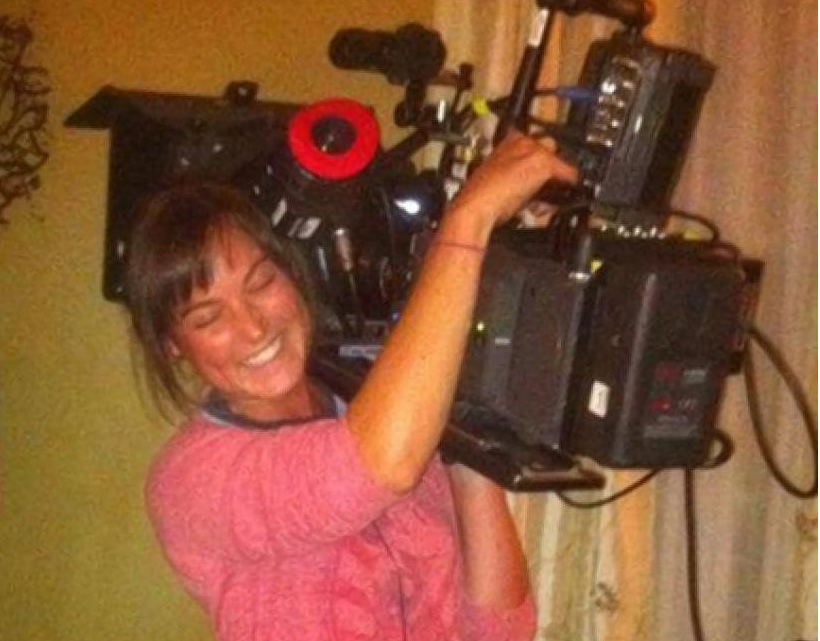
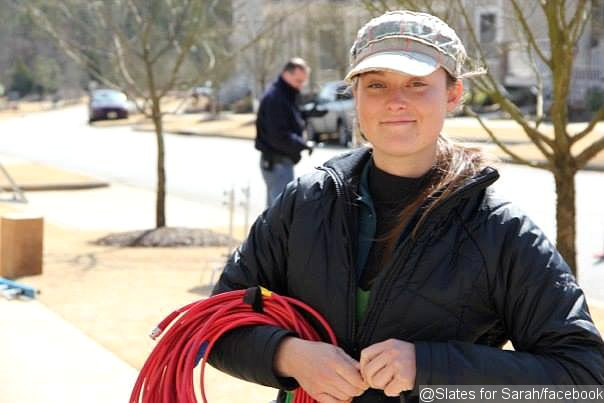
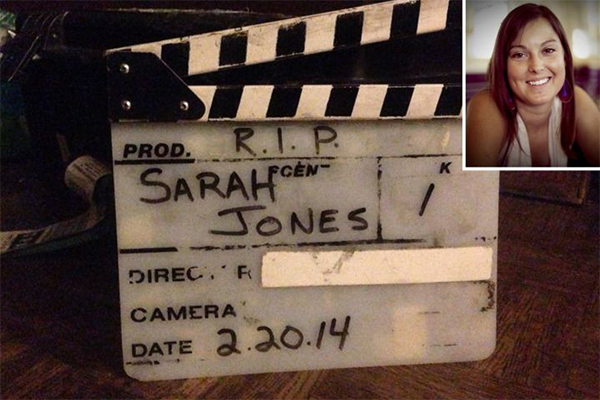
Last February, camera assistant Sarah Jones was tragically hit by a train and killed while working on the set of director Randall Miller’s film Midnight Rider in Georgia. Despite the fact that Miller had expressly been denied permission to use the train trestle by the tracks’ owners, he went ahead with the shoot regardless.
Earlier this month, Miller accepted a plea deal on an involuntary manslaughter charge and was sentenced to 2 years in prison and 8 years probation. As part of the plea deal, charges against his wife, Jody Savin, a producer on the film, would be dropped.
On Friday, he released the following statement:
On Feb 20th, 2014, a great number of mistakes were made and the terrible accident occurred which took Sarah Jones’ life. It was a horrible tragedy that will haunt me forever. Although I relied on my team, it is ultimately my responsibility and was my decision to shoot the scripted scene that caused this tragedy.
I pleaded guilty for three reasons: first, to protect my wife and family; second, out of respect for the Jones family and to not put them through a difficult trial; and, third, to take responsibility for my failure in not knowing that every safety measure was in place.
The location manager, the production designer, the unit production manager, the cinematographer, assistant director and others all made mistakes that led to this, but I have taken responsibility because I could have asked more questions, and I was the one in charge. I have worked in the film industry as a director for 25 years and never had a significant accident of any kind on any one of my sets.
I am heartbroken over this. I hope my actions have spared the Jones family more anguish and that the on-set safety measures that were lacking before this terrible tragedy will now take precedence for all in the industry.
Reading the statement this past weekend, I found myself absolutely incensed over how grotesquely defensive and weirdly self-righteous it is. Throughout the piece, Miller points fingers at his entire crew, all while portraying himself as having simply been the victim of a lack of information.
Let me explain a bit why this hits so close to home.
When you work on a movie, there is intense pressure to provide everything the director asks for. You’re there for one purpose, to help realize the director’s vision, and if you can’t do it, you should get out of the way for the folks who can.
In other words, the worst thing you can say to a director is “no.”
For the most part, the shoots I’ve worked on in my career have been conducted safely and professionally. But I’ve certainly run into my share of directors like Randall Miller – guys who are willing to put their crew at unnecessary risk, say, by demanding a street be closed without police permission, or attempting to forgo a safety test for an abandoned location knowing there’s a good chance it’ll come back positive for asbestos and other hazards. I once nearly got in a fist fight trying to stop a crew member from literally cutting down a stop sign that the director felt was out of place in his shot.
The blowback you get from denying requests like these can be unbelievable. “Come on, can’t we get away with it?” “No one’s going to get hurt.” “It’ll just take five seconds.” “Well, why didn’t you anticipate the director would ask for this in prep?”
Thankfully, I’ve only had the privilege of working for the utmost professional of location managers, who have always had my back, and were always willing to commit the most egregious filmmaking faux pas imaginable: saying “no” – and sticking by it.
Midnight Rider’s location manager, Charley Baxter, worked hard to get Miller the train trestle he wanted to film on, and was apparently able to secure permission to enter the property surrounding the tracks, which belonged to a paper mill. However, a request to film on the actual tracks was denied by the owner, CSX. In true filmmaking “never say no” spirit, Baxter reached out to a different CSX representative – and was again turned down.
Baxter is on record as having forwarded the CSX email denials to Miller, Savin, 1st AD Hillary Schwartz, and executive producer Jay Sedrish. He later had private conversations with each about the situation.
Charley Baxter dared to say no to Miller – but it didn’t matter. Miller, who along with Savin had regularly bragged about skirting safety regulations in favor of guerrilla filmmaking tactics in the past, went ahead and filmed on the bridge anyway. And on February 20, 2014, camera assistant Sarah Jones was killed as an unexpected train barreled through set.
Tellingly, Baxter was not on set that day. Nor was a set medic, which is simply unheard of.
I don’t know any of the crew members who worked on Midnight Rider, but I can imagine a likely chain of events. The paper mill says yes, the track owners say no. Permission is secured to be “near the tracks” i.e. seems like enough legal wiggle room to steal a few shots on the bridge, because we all know nothing is actually going to happen, right? Some attempt is made to figure out the train schedule – I wouldn’t be surprised if some poor PA was sent to literally sit by the tracks for a few days to try and figure out how frequently they came.
And then the day of the shoot arrives, when cast and crew are told that if a train happens to be spotted, they’ll have 60 seconds to get off the tracks.
At this point, I imagine a look was exchanged between crew members, a conversation that went unspoken: “Should we be doing this?” “It must be safe if the producers and director are saying it’s OK.” “I’m sure we’ll be fine. Who dies on a film set?”
To make matters worse, Midnight Rider was a low-budget endeavor and had a number of crew members who were up-and-comers. In other words, folks looking for the chance to prove themselves when the going got tough. Here was just such an opportunity.
On first glance, it almost sounds like Miller is owning up to the crime in his statement. But let’s parse this thing a little more closely to see what he’s really trying to say:
Although I relied on my team [my crew was unreliable, and let me down], it is ultimately my responsibility and was my decision to shoot the scripted scene that caused this tragedy.”
I pleaded guilty for three reasons: first, to protect my wife and family…” [above all else, the reason I pleaded guilty was to get the charges dropped against my wife]
Second, out of respect for the Jones family and to not put them through a difficult trial…” [I’m only pleading guilty because proclaiming my rightful innocence would cause too much grief for the Jones family]
And, third, to take responsibility for my failure in not knowing that every safety measure was in place.” [Why is this third? Why isn’t this first? Why are there even any other bullet points to this?]
The location manager, the production designer, the unit production manager, the cinematographer, assistant director and others all made mistakes that led to this…” [Literally, everyone on my crew is in some way responsible for the tragedy.Everyone except the producer, who happens to be my wife.]
But I have taken responsibility because I could have asked more questions, and I was the one in charge.” [I am only guilty of being misinformed. Had I been better informed by my crew that filming on a train trestle that we had been expressly denied permission to enter is fucking dangerous, this tragedy could have been avoided.]
I have worked in the film industry as a director for 25 years and never had a significant accident of any kind on any one of my sets.” [My unblemished record is further proof of my innocence.]
I am heartbroken over this. I hope my actions have spared the Jones family more anguish…” [Please acknowledge my sacrifice in pleading guilty when I do not believe it to be the case]
…and that the on-set safety measures that were lacking before this terrible tragedy will now take precedence for all in the industry. [Had proper film safety measures been more securely in place, I would have never been allowed to do what I did.]
For Mr. Miller’s sake, I’ve provided an edited version of his statement below, which he is more than welcome to use should he have any interest in proving to the world he has a soul:
On Feb 20th, 2014, a great number of mistakes were made and the terrible accident occurred which took Sarah Jones’ life. It was a horrible tragedy that will haunt me forever. It is ultimately my responsibility and was my decision to shoot the scripted scene that caused this tragedy.
I pleaded guilty for one reason: to take responsibility for my failure in not knowing that every safety measure was in place. I could have asked more questions, and I was the one in charge. I have worked in the film industry as a director for 25 years and never had a significant accident of any kind on any one of my sets.
I am heartbroken over this. I hope that the on-set safety measures that were lacking before this terrible tragedy will now take precedence for all in the industry.
When I first heard of the incident last year, I found myself having a very emotional reaction. In particular, it brought me back to an incident that happened very early on in my career.
I was working as a locations production assistant (lowest job there is) on a large movie being helmed by a very famous director.
We were filming on a rooftop I’d scouted and helped to secure. Contracts were signed, insurance was in place, building reps were on site, riggers had prepped the location, and we were all ready for the shoot.
Then something unexpected happened. The director arrived on the rooftop, looked around, got a funny expression on his face, and announced we were on the wrong roof.
This was an extraordinarily odd thing to say, as not only had we scouted this very rooftop with him personally, we had later tech scouted it with the entire crew. Nevertheless, the director looked around, pointed at a neighboring rooftop, announced that that was where he wanted to film, and started off.
This sent the crew into pandemonium, and soon, everyone was frantically trying to haul equipment off our rooftop and get into the neighboring building where we had absolutely no permission to be. Mind you, this wasn’t a small independent film – it was a $100 million dollar studio film with a crew numbering well over 100.
The director managed to get into the building and took the elevator to the roof. The camera crew arrived next, and loaded up the intensely small, incredibly ancient elevator with gear. A few guys managed to squeeze in with it, and they started up.
The elevator got stuck somewhere between the 17th and 18th floor.
There was nothing we could do. We obviously didn’t have a super on call as we did at the original, planned location. Hell, we didn’t even know who the management company was. I recall an off-hand suggestion being made by a producer that if we were able to get in touch with management, to make the filming deal before letting them know about the elevator situation, as they might otherwise charge us more.
The crew members remained trapped in that elevator for about half an hour before we finally managed to locate someone who could get them down. Meanwhile, the rest of the crew used the stairs, and the director was able to get his shot, which lasted all of 4 seconds in the final film.
What I’ll never forget is a crew member turning to me right at the start of the whole fiasco and asking “Should we be doing this?”
All I could do was shrug. Who was I, a lowly locations production assistant, to stand in the way of a famous, well-respected director and hold up his $100 million film?
It chills me to think that had that same young locations PA been on set that day in Georgia and been asked the same question, he would have ultimately trusted his director, Randall Miller, and gone right up on that train trestle with Sarah Jones.
When I look at pictures of Sarah Jones, I see myself.
“Should we be doing this?”
The single saving grace about this horrific incident is the fact that we now have something to say when a simple “no” won’t suffice for people like Randall Miller, who disrespect their crew by treating filmmaking as an exercise in swashbuckling derring-do.
We’ll simply say “Sarah Jones.”
* * * * *
I know that quite a few folks in film production read this blog. If you’d like to share any personal stories of directors/producers forcing their crews to take unnecessary risks, I’d be more than happy to highlight them here. Feel free to remain anonymous.
Finally, be sure to check out Slates for Sarah and Safety for Sarah, industry-wide efforts to keep Sarah’s memory alive and create a safer working environment. I also recommend this 20/20 pieceon the tragedy, which goes into much further detail.